
tree-sitter-mlir
A tree-sitter grammar for MLIR, derived from the MLIR language reference rather than a list of dialects.
- C (generated), JavaScript
- MIT license
- github.com/tkamucheka/tree-sitter-mlir
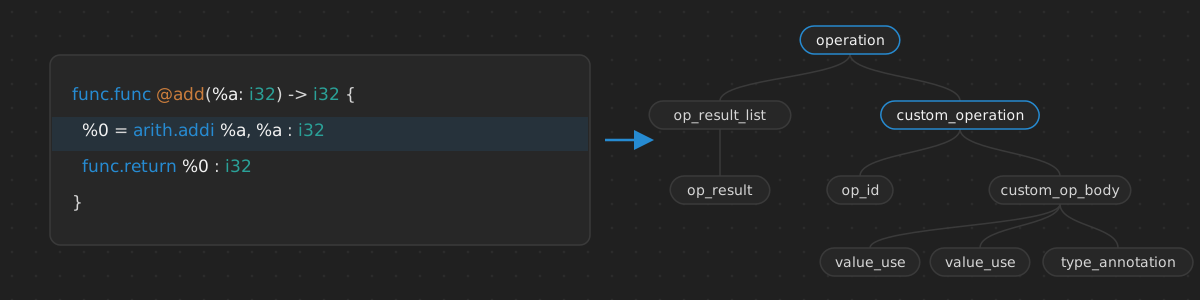
A tree-sitter grammar for MLIR, the Multi-Level Intermediate Representation. The grammar follows the generic MLIR textual format of the MLIR Language Reference, and handles the custom operation formats of dialects without enumerating the dialects.
The existing parser works from a fixed list of dialects and their grammars. This one asks whether a parser derived from MLIR’s EBNF alone can handle arbitrary dialects; the blog post tells the story. It has been tested, but not exhaustively.
Language Coverage
- Generic operations: the
"opname"(args) {attrs} : functypeform. - Custom operations: dialect-specific formats with arbitrary prefix tokens, type annotations, regions, and successor blocks.
- Types: builtin scalar and parametric types (
tensor,memref,vector,complex,tuple), dialect types (!namespace.name<...>), type aliases, and function types. - Attributes: all builtin attribute kinds (
dense,dense_resource,sparse,opaque,strided,affine_map,affine_set, array, dictionary), dialect attributes, and attribute aliases. - SSA values:
%id, result lists, and block arguments with their types and attributes. - Regions and blocks: entry blocks, labeled blocks with arguments, and block successors.
- Symbol references:
@name, with nested::qualification.
Queries
Highlighting, SSA value scopes for rename and go to definition, indentation,
folds, symbol tags, and text objects, in queries/.
Installation
In Neovim with nvim-treesitter (main branch), register the parser in a
User TSUpdate autocommand:
vim.api.nvim_create_autocmd("User", {
  pattern = "TSUpdate",
  callback = function()
    require("nvim-treesitter.parsers").mlir = {
      install_info = {
        url = "https://github.com/tkamucheka/tree-sitter-mlir",
        queries = "queries",
        generate = true,
      },
    }
  end,
})
Bindings for Python and Rust, and the development workflow, are described in the README.